


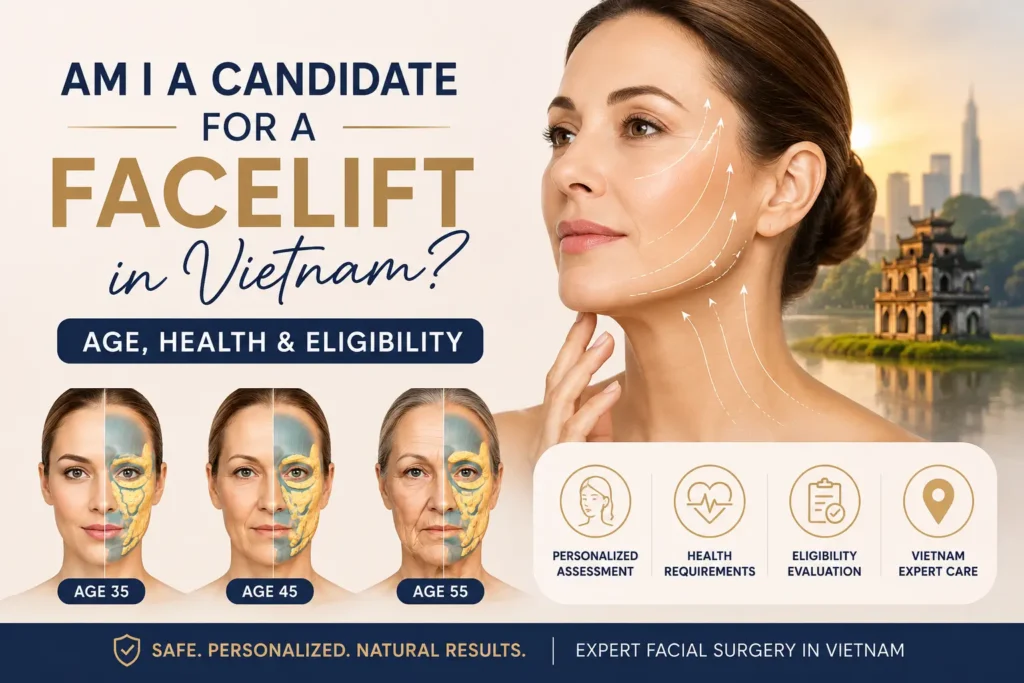
Am I a Good Candidate for a Facelift?
What actually matters in a candidacy assessment is a combination of factors I evaluate together, never in isolation:
Skin elasticity and laxity — how much sagging is present along the jawline, jowls, and neck, and how the tissue responds when gently lifted during examination.
Overall physical health — well-managed blood pressure, stable blood sugar, and no untreated cardiac or clotting conditions.
Non-smoking status — nicotine restricts blood flow to healing tissue and meaningfully raises the risk of complications, so I ask every patient to stop well ahead of surgery.
Realistic goals — a facelift restores a more rested, refreshed version of your own face; it does not create a different bone structure or halt aging permanently.
Emotional readiness — patients who are doing this for themselves, rather than to satisfy someone else’s opinion, consistently report higher satisfaction afterward.
I don’t view candidacy as a pass/fail checklist. Two patients with identical dates of birth can receive entirely different recommendations because their skin quality, bone support, and medical history are different. That’s precisely why a proper evaluation — not a generic age cutoff — is the only reliable way to answer this question for you specifically.
I don’t view candidacy as a pass/fail checklist. Two patients with identical dates of birth can receive entirely different recommendations because their skin quality, bone support, and medical history are different. That’s precisely why a proper evaluation — not a generic age cutoff — is the only reliable way to answer this question for you specifically.
A Note From ABmedi Team Clinic
If non-surgical treatments still give you the improvement you’re looking for, I will tell you that honestly. Not every patient who inquires about a facelift needs one yet — and part of my job is telling you when it’s still too early.
What’s the Best Age for a Facelift?
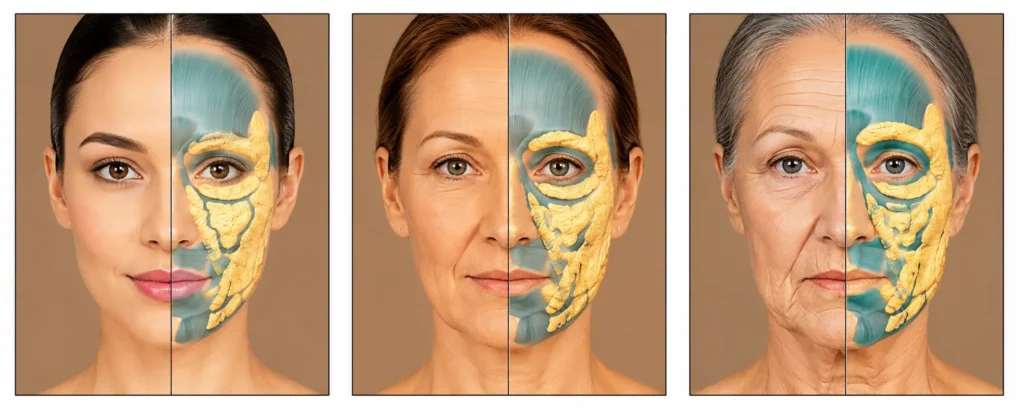
Quick answer: There is no fixed “correct” age. Most facelift patients are between their mid-40s and late 60s, with the average patient in their mid-to-late 50s — but candidacy is driven by facial aging patterns and skin quality, not the number on your ID.
What changes decade to decade isn’t eligibility — it’s the type of correction that tends to make sense:
| Age Range | Typical Presentation | Common Approach |
| Late 30s – Early 40s | Early jawling, mild laxity, skin still highly elastic | Often better served by non-surgical treatments or a mini facelift |
| Mid 40s – 50s | Moderate jawling, nasolabial folds, loss of jawline definition | Traditional or deep plane facelift, frequently combined with the eyes |
| 60s | More advanced skin laxity and volume loss | Deep plane facelift, sometimes paired with a neck lift |
| 70s and beyond | Significant sagging, but excellent candidates when systemically healthy | Full evaluation of surgical fitness; procedure tailored to healing capacity |
Skin quality is a better predictor of your result than your age will ever be. Supple, elastic skin holds a lift longer and heals more efficiently than skin that has been heavily sun-damaged or thinned over decades. I’ve operated on healthy patients in their late 70s with outstanding outcomes, and I’ve also advised patients in their late 30s to wait, because surgery wasn’t yet the right tool for what they were seeing in the mirror.
Health Requirements Before Facelift Surgery in Vietnam
Quick answer: Candidates should be free of uncontrolled chronic disease, should have stopped smoking and nicotine products for several weeks pre-surgery, should be able to safely pause blood-thinning medications and certain supplements, and should not be pregnant at the time of surgery.
Before I ever confirm a surgical date, patients complete a detailed medical intake so we can identify anything that needs to be addressed first. The most common factors I review include:
| Blood pressure and cardiac history | — must be well-controlled; uncontrolled hypertension increases bleeding risk under anesthesia. |
| Diabetes management | — stable blood sugar supports proper wound healing; poorly controlled diabetes needs medical optimization first. |
| Smoking and vaping | — I ask patients to stop at least three to four weeks before and after surgery, since nicotine constricts the small vessels that keep facial skin alive during recovery. |
| Medications and supplements | — blood thinners, certain herbal supplements, and high-dose vitamin E or fish oil typically need to be paused under medical guidance before surgery. |
| Body weight stability | — significant planned weight loss is usually best completed before a facelift, since major changes afterward can affect your result. |
| Pregnancy status | — facelift surgery is not performed during pregnancy. |
None of this is unique to having surgery abroad — it’s simply responsible surgical medicine. The one difference for international patients is timing: we build these requirements into your travel planning early, so nothing gets discovered for the first time after you’ve already landed in Hanoi.
Why This Matters More for Medical Travel
A patient having surgery close to home can postpone easily if something needs to be addressed. A patient who has flown from the US, Australia, or Canada cannot. This is exactly why ABmedi Team Clinic front-loads health screening into the virtual consultation stage — so surprises are resolved before you travel, not during your trip.
Can You Get a Virtual Consultation Before Flying to Vietnam?
Quick answer: Yes. International patients complete a video consultation with the surgeon before booking travel, so candidacy, technique, and rough cost expectations are confirmed before any flights are purchased.
I never ask an international patient to commit to a flight before we’ve spoken directly. The virtual consultation typically covers:
- A review of your photos and medical history submitted in advance
- A live video conversation to examine your skin, discuss your goals, and answer questions directly
- A preliminary recommendation on technique (for example, a deep plane facelift versus a mini facelift)
- An initial checklist of any health items to resolve before your surgery date
- A working cost estimate and proposed timeline for your trip
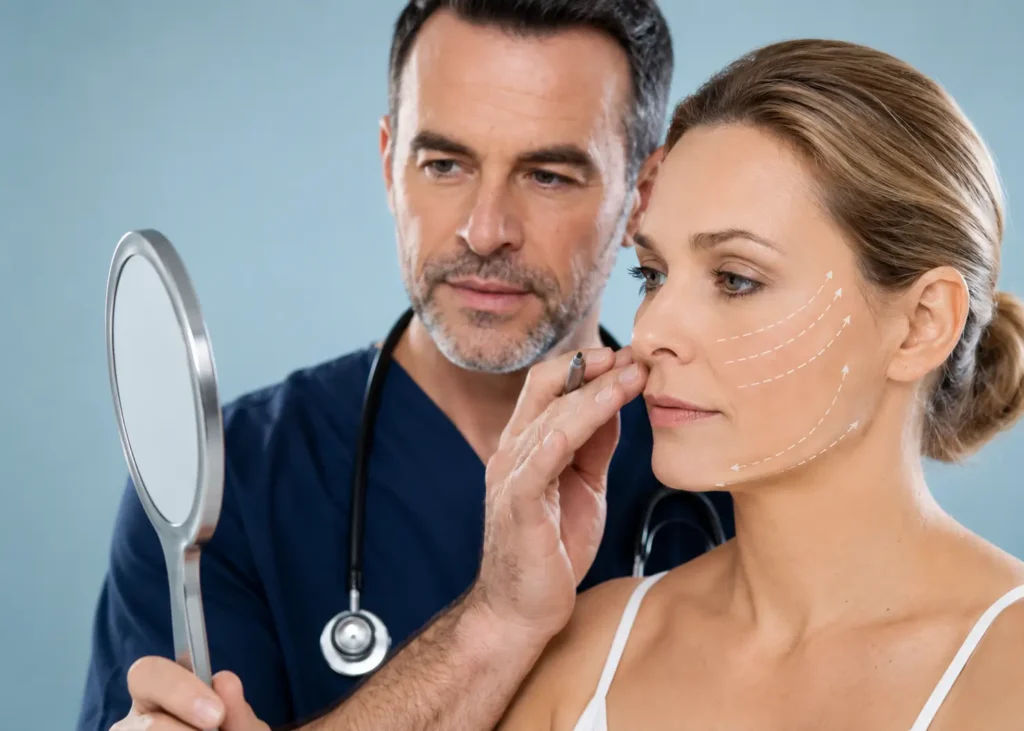
Final candidacy is always confirmed with an in-person exam and updated bloodwork once you arrive, but the virtual consultation is what lets you book travel with confidence rather than guesswork. It also gives us the chance to flag, early, if a different procedure — or more time — would genuinely serve you better.
What Medical Tests Are Required Before Surgery?
Before your surgery date is finalized, we require lab work to confirm you’re a safe candidate for anesthesia and healing. Typical pre-operative testing includes:
| Complete blood count (CBC) | — screens for anemia, infection, or abnormal clotting cells |
| Metabolic panel | — evaluates kidney and liver function, electrolytes, and blood sugar |
| Coagulation screening | — checks how well your blood clots |
| ECG (electrocardiogram) | — generally required for patients over 40 or with a history of heart conditions |
| Pregnancy testing | where applicable |
| Chest imaging or additional cardiac workup | — only when your history warrants it |
Many of our international patients complete baseline labs at home and bring recent results with them, which can streamline the in-country process; others prefer to complete everything after arriving in Hanoi. Either approach works, and we’ll confirm which makes more sense during your virtual consultation. Results are generally required within 30 days of your surgical date to remain valid.
Can You Combine a Facelift With Other Procedures in One Trip?
For patients traveling internationally, this question usually isn’t just about aesthetics — it’s about logistics. Flying across the world once for a single recovery period is far more practical than doing it twice. In my practice, combination surgery is the norm rather than the exception, because a facelift alone doesn’t address every area of the face:
| Blepharoplasty (eyelid surgery) | — a facelift refreshes the lower face and jawline but doesn’t correct drooping upper eyelids or under-eye puffiness; pairing the two creates a more balanced, harmonious result. |
| Brow lift | — addresses a heavy or low brow that a facelift alone won’t lift. |
| Neck lift | — commonly performed alongside a facelift when neck laxity is significant. |
| Fat transfer | — restores volume lost to aging, complementing the tightening effect of a facelift. |
Whether combining procedures is appropriate for you comes down to your overall health, the length of anesthesia your body can safely tolerate, and your recovery goals — all of which we discuss candidly during your consultation. Not every patient should combine everything at once, and I’ll say so directly if I think staging procedures is the safer path for you.
Frequently Asked Questions
Q1: What disqualifies you from a facelift?
You may be disqualified from a facelift if you have:
- Uncontrolled Medical Conditions: Severe cardiovascular issues, poorly managed diabetes, or bleeding disorders.
- Active Smoking: Nicotine constricts blood vessels and severely impairs skin healing. Patients must quit completely 4–6 weeks before and after surgery.
- Unrealistic Expectations: Expecting perfection rather than structural improvement.
- Blood-Thinning Medications: Inability to safely stop taking medications that promote bleeding.
Q2: How much does a face lift cost in Vietnam?
At reputable international clinics like ABmedi Team Clinic, a facelift typically costs between $2,500 and $4,000 USD (approx. 85,000,000 to 200,000,000 VND). The exact price depends on the chosen technique (Mini vs. Deep Plane), anesthesia type, and any combined procedures.
Q3: What BMI is too high for plastic surgery?
A BMI of 35 or higher is generally considered too high for elective plastic surgery. A high BMI increases the risks of anesthesia complications, deep vein thrombosis (DVT), and delayed wound healing. At ABmedi Team Clinic, we recommend patients achieve a stable, healthy weight before surgery.
Q4: Is 72 years old too old for a facelift?
No, 72 is not too old. Medical health matters more than chronological age. If a 72-year-old patient is in excellent general health and cleared by a cardiologist and anesthesiologist, they can safely undergo a facelift with highly rewarding results.
Q5: What is the best cosmetic procedure for a 70 year old woman?
The gold standard is a Deep Plane Facelift combined with a Neck Lift. Non-surgical options cannot fix severe sagging at this age. For optimal rejuvenation, ABmedi Team Clinic frequently combines this with Autologous Fat Grafting (to restore lost volume) and Blepharoplasty (eyelid surgery).
📞 💬 WhatsApp / Chat: [http://wa.me/84975142666] 🌐 Book online: [+84-975-142-666]
Consultations are available in-clinic and online for international patients. Most patients leave their first appointment knowing exactly what they need — and feeling confident about the path ahead.
