


One of the most common questions I hear during patient consultations at ABmedi Team Clinic is: “Am I doing this too early—or have I waited too long?”
It is a critical question. The timing of a rhytidectomy (facelift surgery) matters immensely. However, there is no single “perfect” age. Instead, your current age and biological skin quality dictate what the surgery can achieve, how your deep tissues respond, and how many years your results will last.
While the statistical “sweet spot” for facial rejuvenation typically falls between 45 and 65, a 47-year-old with early jawling requires a fundamentally different surgical approach than a 67-year-old dealing with advanced neck laxity and deep nasolabial folds.
How Your Face Ages Differently in Your 40s vs. 60s
Before comparing surgical timing, it helps to understand what’s actually happening to the face at different decades. Aging is not a single event — it’s an accumulation of changes happening at multiple tissue levels simultaneously.

In your 40s, the early signs appear: the jawline begins to soften, fine lines deepen around the mouth and eyes, and mild jawling starts at the corners of the jaw. Crucially, skin elasticity is still largely intact. Collagen production has slowed but not stopped. The face at this stage responds well to precise, targeted intervention.
By your 60s, the picture shifts substantially. Skin laxity is more pronounced, jowls are established, neck skin has begun to sag, cheeks have lost volume and descended, and the nasolabial folds have deepened. The face at this stage often needs more comprehensive correction — but the results of a well-executed facelift can still be dramatic and deeply satisfying.
Both stages are valid candidates for surgery. The procedure simply looks different depending on where you are in the aging process.
Getting a Facelift in Your 40s: The Case for Early Intervention
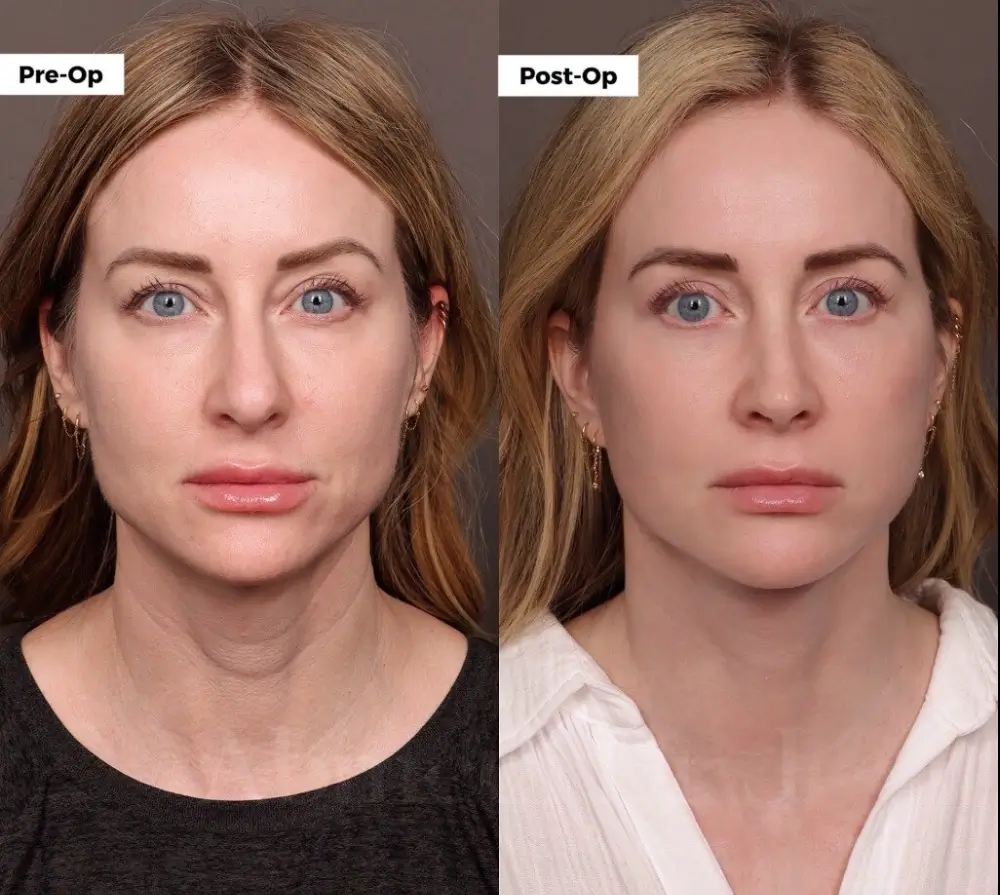
Better tissue quality going in. In your 40s, skin elasticity and ligament integrity are still relatively strong. This means the lift settles into a more naturally youthful position rather than achieving a stretched or over-corrected appearance. Surgeons can make smaller, more precise adjustments that age gracefully over time.
Less to correct means more natural results. Because tissue descent is still mild to moderate at this stage, the surgery doesn’t require dramatic repositioning. The result looks like a refreshed, rested version of you — not a visibly altered one. Many patients find that no one can identify that they’ve had surgery at all.
Longer-lasting outcomes. A facelift performed in the early-to-mid 40s on a patient with good skin health can deliver results lasting 8 to 12 years, sometimes longer with proper maintenance. That lifespan is often greater than surgery performed later, when tissues require more aggressive correction.
Faster recovery. General health is typically at a peak in the 40s. Healing is efficient, bruising resolves more quickly, and the return to work and normal activity happens sooner than it does for older patients.
Reducing the long-term treatment burden. Many patients in their 40s who have been managing their appearance through repeated fillers, neurotoxins, and skin-tightening treatments reach a point where non-surgical options are no longer keeping pace. A single surgical intervention at this stage can replace years of maintenance appointments — and often proves more cost-effective over time.
At ABmedi Team Clinic, patients in their 40s are most commonly good candidates for a mini facelift or an early deep plane facelift, depending on the degree of laxity and their specific anatomy. The mini facelift, with shorter incisions and a focused correction of the lower face, carries a recovery period of under two weeks and suits patients who aren’t yet dealing with significant tissue descent. For those with more notable jawling or midface descent, the deep plane approach at this stage still delivers a subtler, more natural result than the same technique performed a decade later.
A note on fillers versus surgery in your 40s. This is one of the most common crossroads patients face. Fillers work beautifully for volume restoration and subtle line softening — but they cannot lift descended tissue, reposition the SMAS layer, or address true skin laxity. Once jawling has established itself, or skin has begun to drape rather than sit firmly on the face, no amount of filler corrects it — and overfilling attempts to compensate can create an unnatural, puffy appearance. When structural aging has progressed beyond what injectables can address, surgery becomes the more effective and honest answer.
Getting a Facelift in Your 60s: The Case for Comprehensive Rejuvenation
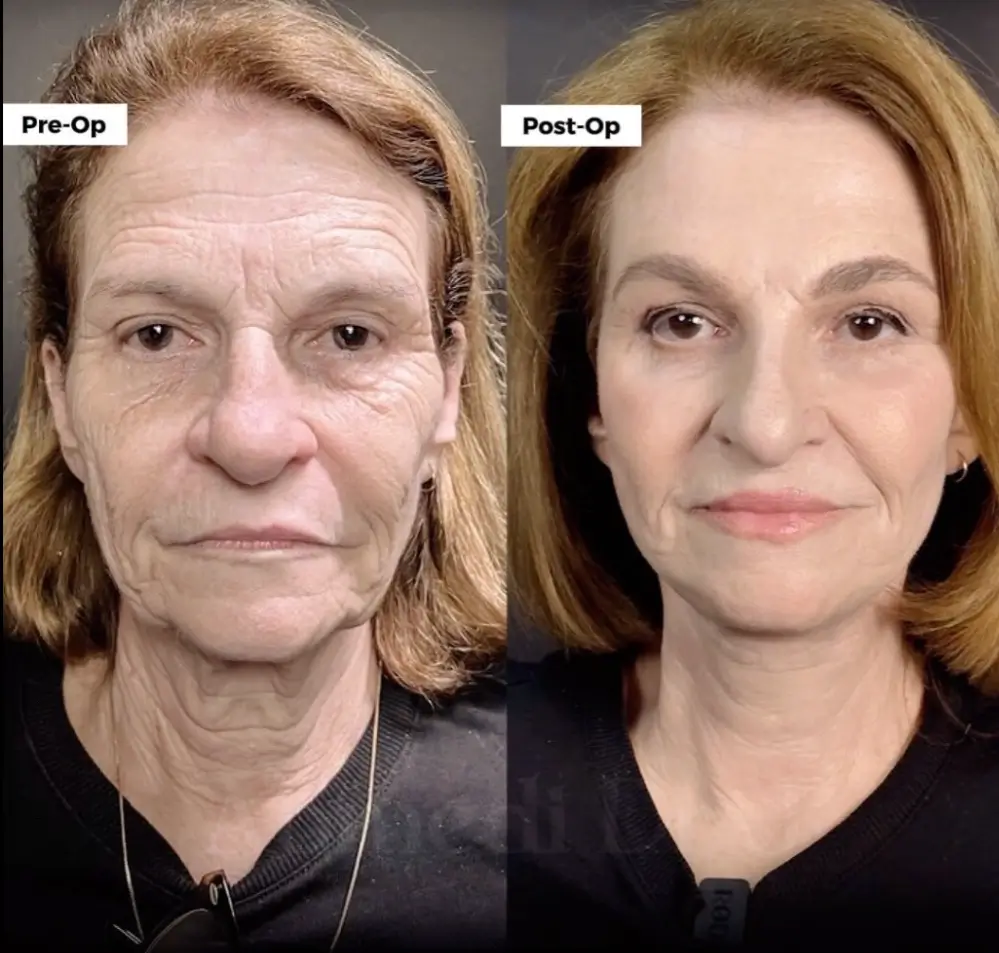
The 60s remain, statistically, the most common decade for facelift surgery — and for good reason. By this stage, the signs of aging are clear enough that surgery offers genuinely transformative results, and most patients have reached a point where they’re ready both physically and emotionally to pursue the process.
The results can be profound. Patients who undergo facelift surgery in their 60s frequently describe the experience as one of the most meaningful decisions they’ve made — not just for how they look, but for how they feel. The ability to address deep jawling, neck laxity, pronounced facial folds, and descended midface structures in a single surgical session delivers results that non-surgical treatments simply cannot replicate.
Comprehensive techniques are often the right call. By the 60s, most patients benefit from a full deep plane facelift or a combination approach that may include a neck lift, brow lift, or eyelid surgery alongside the primary facelift. These procedures address the face as a system — lifting and repositioning multiple layers of tissue — rather than targeting one isolated concern.
Is 60 too old for a facelift? Medically, no. This is one of the most persistent misconceptions I encounter. Published research, including a retrospective study published in the Archives of Facial Plastic Surgery, found no statistically significant difference in complication rates between facelift patients aged 75 and older versus those aged 45 to 61. What matters is not the patient’s age on paper — it’s their cardiovascular health, healing capacity, and freedom from conditions that could complicate recovery. A thorough preoperative evaluation identifies any such concerns before a surgical plan is made.
Recovery takes slightly longer — but is entirely manageable. In the 60s, swelling and bruising may persist a few days longer than in younger patients, and the healing curve tends to extend by a week or two. Most patients are comfortable returning to social activities within three to four weeks, and full results are visible by the three-to-six-month mark.
If you’ve had a facelift in your 40s or 50s, your 60s may be the right time for a revision. Facelift results typically last seven to ten years, sometimes longer with a deep plane technique. A second procedure in the 60s — often less extensive than the first — refreshes the outcome and maintains the improvement without starting from scratch.
Comparison Table: Facelift in Your 40s vs. Facelift in Your 60s
| Facelift in Your 40s | Facelift in Your 60s | |
| Aging stage | Early-to-moderate laxity; mild jawling | Established laxity; significant jawling and neck sagging |
| Best technique | Mini facelift or early deep plane | Full deep plane; often combined with neck lift or brow lift |
| Result character | Subtle, preventative, highly natural | Transformative, comprehensive, dramatic improvement |
| Longevity | 8–12 years | 7–10 years |
| Recovery | Faster; typically 10–14 days to social readiness | Slightly longer; typically 3–4 weeks to social readiness |
| Anesthesia safety | Excellent | Excellent when medically screened |
| Primary goal | Get ahead of aging; reduce long-term maintenance | Reverse established aging; restore youthful contours |
Self-Assessment: 4 Signs It Is Time to Schedule a Consultation
Regardless of your age, your anatomy will tell you when it is time to transition from non-surgical treatments to a permanent surgical solution. Look for these four clinical indicators:
- The Filler Threshold: Injectables, threads, and energy-based skin tightening devices are no longer delivering visible or cost-effective results.
- Mandibular Blurring: Heavy jowls have altered your straight jawline or created a double chin effect.
- Cervical Draping: The skin on your neck has begun to sag, fold, or create a “turkey neck” appearance.
- The Mirror Test: You frequently use your fingers at your temples or jawline in the mirror to mimic the effects of a upward lift.
What Doesn’t Change Between the Two Decades
Whatever age you choose to move forward, a few principles hold constant.
Surgeon selection is everything. The technique must be matched not just to your age but to your specific tissue quality, bone structure, and aesthetic goals. Look for a surgeon with documented experience in facelift surgery specifically, a portfolio of results you find natural and appealing, and a consultation process that feels honest rather than transactional.
Realistic expectations produce the best outcomes. A facelift is not an attempt to look 30 again. The goal — at any age — is to look like a well-rested, refreshed version of yourself, at whatever age you currently are. When that expectation is aligned between patient and surgeon, the results are consistently satisfying.
Maintenance extends the result. Sun protection, a consistent skincare regimen, a healthy lifestyle, and occasional non-surgical touch-ups extend the life of any facelift result — regardless of when the surgery was performed.
Frequently Asked Questions (FAQs)
Q1: Is 45 too early for a facelift, and should you consider it in your 40s?
A: No, 45 is not too early; in fact, the 40s have become the ideal decade for a modern “preventative” facelift. In your 40s, skin elasticity is still relatively high, and tissue damage is minimal. Opting for a facelift (such as a Mini Facelift or Deep Plane Facelift) at this stage yields incredibly natural, subtle results because we are reshaping tissues at the very first signs of structural dropping. It essentially “freezes” your look, allowing you to age much more slowly and gracefully compared to waiting until severe sagging sets in.
Q2: Is 60 a good age for a facelift?
A: Age 60 is an absolute “golden era” for a comprehensive facial rejuvenation. At this stage, structural changes like deep jowls, a sagging neck, and lost midface volume become more pronounced, making the contrast between “before” and “after” remarkably rewarding. A full facelift—especially when targeting the deep SMAS layer—provides dramatic, life-changing results for 60-year-old patients, completely refreshing their look while restoring a sharp, well-defined jawline and smooth neck contour.
Q3: When does a facelift look its best after surgery?
A: A facelift typically reaches its “golden window” of looking its absolute best between 3 to 6 months post-surgery. While major swelling and initial bruising subside within the first 2 to 3 weeks (allowing you to comfortably return to social activities), it takes a few months for the deep tissues to settle completely, the internal incisions to soften, and the skin to regain its natural flexibility. From month 6 onward, the results look entirely seamless, soft, and natural.
Q4: Can a facelift realistically make you look 10 years younger?
A: Yes, a well-executed facelift consistently turns back the physical appearance clock by 7 to 10 years. The longevity and youthfulness of the outcome heavily depend on the surgical technique used. Traditional skin-only pull facelifts may offer a temporary stretch, but advanced deep-tissue manipulation (Deep Plane Facelift) physically repositions the underlying muscular framework, ensuring that the 10-years-younger look remains structurally stable and ages naturally with you.
Q5: How can a surgical treatment plan take 20 years off your face?
A: While a standard facelift safely removes about a decade of aging, taking 15 to 20 years off your face requires a multi-modality surgical plan rather than a single procedure. To achieve this ultimate transformation, plastic surgeons typically combine:
- A Deep Plane Facelift & Neck Lift: To lift dropped jowls, tighten the underlying muscular layers, and eliminate a sagging neck.
- Upper and Lower Blepharoplasty: To clear away heavy, hooded eyelids and smooth out under-eye bags that cause a perpetually tired look.
- Autologous Fat Transfer: To inject micro-droplets of your own fat back into hollow temples, sunken cheeks, and deep tear troughs, restoring the plump volume characteristic of youth.
📞 💬 WhatsApp / Chat: [http://wa.me/84975142666] 🌐 Book online: [+84-975-142-666]
Consultations are available in-clinic and online for international patients. Most patients leave their first appointment knowing exactly what they need — and feeling confident about the path ahead.
