



Choosing a facelift isn’t just about picking a clinic. It’s about matching the right technique to the way your face is aging. A procedure that’s perfect for a 45-year-old with early jowls may fall short for a 62-year-old with loose neck skin and deep folds.
This guide walks you through the main facial rejuvenation options available in Vietnam, from the short-scar mini facelift to the full SMAS facelift, neck lift, and non-surgical “liquid facelift.” By the end, you’ll have a clear sense of which approach fits your goals, your anatomy, and your timeline. If you’d like expert input, Abmedi’s facelift team in Vietnam can review your photos and suggest a suitable approach.
Quick Comparison: Facelift Techniques at a Glance
| Technique | Best For | Typical Age | Anesthesia | Downtime | Results Last | Est. Cost in Vietnam (USD) |
|---|---|---|---|---|---|---|
| Mini facelift | Early jowls, mild laxity | 40 – 55 | Local + IV sedation | 7 – 10 days | 5 – 8 years | $1,800 – $3,500 |
| Full SMAS facelift | Moderate to advanced sagging | 50 – 70 | General | 2 – 3 weeks | 8 – 12 years | $3,500 – $6,500 |
| Deep plane facelift | Midface descent, deep folds | 50 – 70 | General | 2 – 3 weeks | 10 – 15 years | $5,000 – $9,000 |
| Neck lift (platysmaplasty) | Neck bands, “turkey neck” | 45 – 70 | General or IV sedation | 10 – 14 days | 8 – 10+ years | $2,500 – $4,500 |
| Liquid facelift | Volume loss, fine lines | 30 – 50 | Topical numbing | 0 – 2 days | 6 – 18 months | $500 – $2,000 per session |
Costs and longevity are general estimates. Your surgeon will tailor recommendations after an in-person exam. For a full price breakdown, see our Vietnam facelift cost guide.
Mini Facelift vs. Full Facelift: Key Differences & Ideal Candidates
The biggest difference between a mini and a full facelift is how deep and how far the surgeon works. Both lift sagging tissue, but they treat different degrees of aging.
What Is a Mini Facelift? (Pros, Cons & Target Age)
A mini facelift, sometimes called a short-scar or “S-lift,” uses a smaller incision that runs in front of the ear and sometimes tucks just behind it. The surgeon tightens the lower face and jawline through a limited SMAS plication or imbrication, then trims the excess skin.
Ideal candidates are usually in their 40s to mid-50s, with good skin elasticity, early jowling, and minimal neck laxity.
Pros:
– Shorter incisions and less visible scarring
– Often performed under local anesthesia with IV sedation
– Faster recovery, with most patients presentable in 7 to 10 days
– Lower cost
Cons:
– Limited effect on the neck and midface
– Results typically last 5 to 8 years, shorter than a full facelift
– Not suitable for heavy skin laxity or significant neck banding
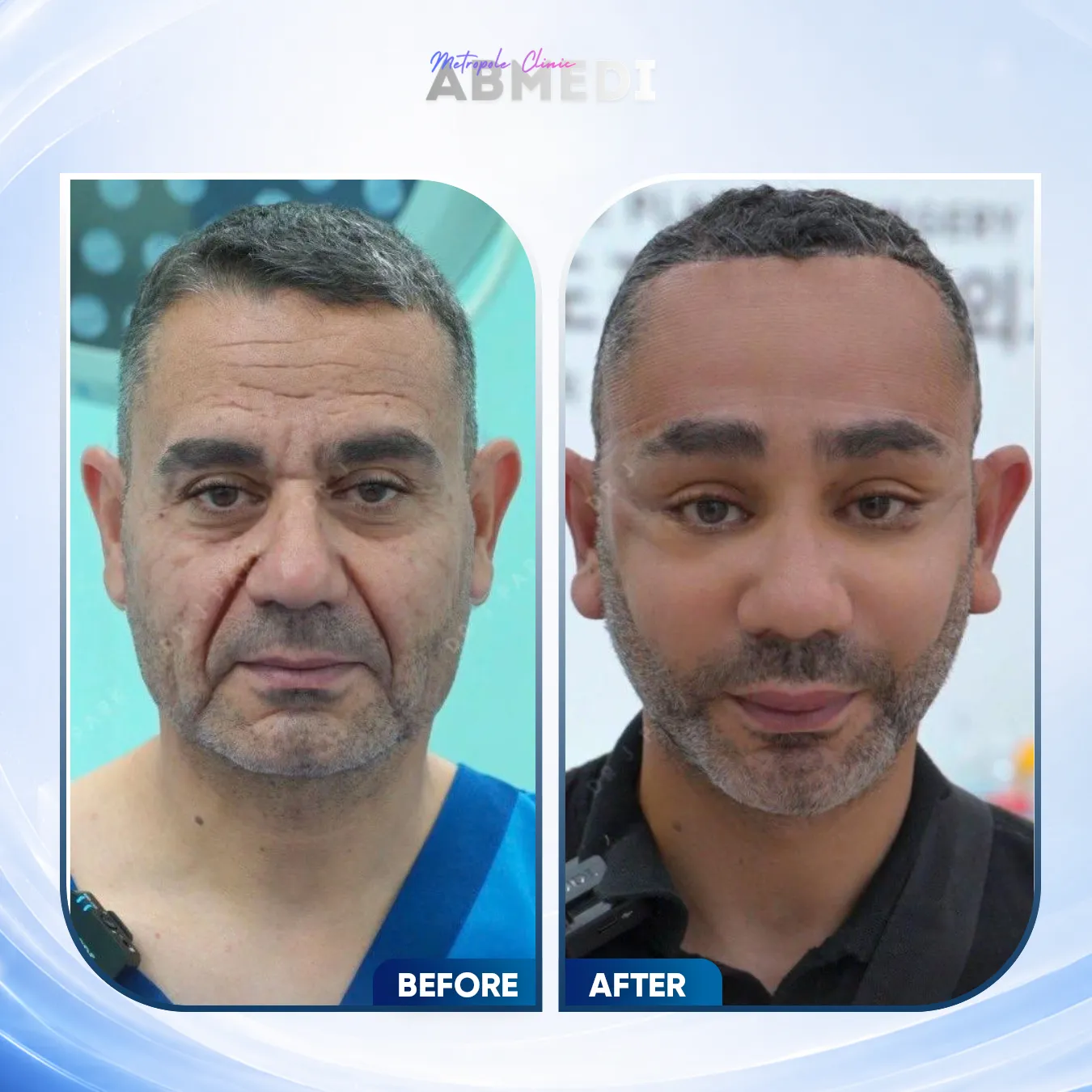
What Is a Full SMAS Facelift? (Surgical Depth & Results)
A full SMAS facelift is the traditional, comprehensive procedure. The incision usually starts in the temporal hairline, curves around the ear, and ends in the hairline behind the ear. Through it, the surgeon lifts and repositions the SMAS layer, the fibromuscular tissue that supports your facial skin.
Because the deeper layer carries the tension, the skin can be redraped without being pulled tight. That’s the key to avoiding the “windswept” look. A full facelift addresses the jowls, lower cheeks, marionette lines, and often the upper neck in one operation.
For patients with significant midface descent, many surgeons recommend a deep plane facelift, which releases the retaining ligaments and moves the skin and SMAS as a single unit for an even more natural lift.
Ideal candidates are typically 50 to 70, with moderate to advanced sagging, deeper folds, and loose skin along the jaw and neck. Results commonly last 8 to 12 years or longer. Learn more in our guide to facelift results and longevity.
Facelift vs. Other Facial Rejuvenation Options
A facelift isn’t the only path to a fresher look. Depending on where you’re seeing the most change, a targeted procedure or a non-surgical approach may be a better first step.
Facelift vs. Neck Lift: Fixing Sagging Jowls and Neck Banding
A facelift primarily targets the lower two-thirds of the face: the cheeks, jowls, and jawline. A neck lift focuses below the jaw, treating loose skin, excess fat under the chin, and the vertical cords known as platysmal bands.
The key neck procedure is platysmaplasty, where the surgeon tightens the platysma muscle, often through a small incision under the chin. Liposuction of the neck may be added for a cleaner jaw-to-neck angle.
- Choose a neck lift alone if your face looks youthful but your neck has bands or a “turkey wattle.”
- Choose a facelift alone if jowls and cheek sagging are the main issue and your neck is still firm.
- Combine both if aging is visible across the jawline and neck. This is the most common choice for patients over 55.
Surgical Facelift vs. Liquid Facelift (Dermal Fillers & Botox)
A liquid facelift uses injectables instead of incisions. Hyaluronic acid dermal fillers restore lost volume in the cheeks, temples, and folds, while neuromodulators such as Botox soften dynamic wrinkles and can subtly lift the brow.
| Surgical Facelift | Liquid Facelift | |
|---|---|---|
| What it treats | Sagging skin and deep tissue laxity | Volume loss and fine lines |
| Downtime | 2 – 3 weeks | 0 – 2 days |
| Results last | 8 – 12+ years | 6 – 18 months |
| Long-term cost | One-time investment | Ongoing maintenance |
The honest truth: fillers can’t remove loose skin. Overfilling to compensate for sagging often leads to a heavy, “pillow face” appearance. A liquid facelift is ideal for early aging or as a complement to surgery, not a replacement for it.
Combining Procedures: Can You Get Multiple Surgeries at Once?
Yes, and for many international patients it makes a lot of sense. Combining procedures means one anesthesia event, one recovery period, and one trip.
Popular Combinations (Facelift + Blepharoplasty / Fat Transfer)
- Facelift + blepharoplasty: Upper and/or lower eyelid surgery removes hooded skin and under-eye bags so your eyes match your newly lifted lower face.
- Facelift + fat transfer: Autologous fat grafting uses your own fat, harvested from the abdomen or thighs, to restore volume in hollow cheeks and temples.
- Facelift + neck lift: Platysmaplasty and neck liposuction for a seamless jaw and neck contour.
- Facelift + brow lift: Raises heavy brows and smooths forehead lines for full-face harmony.
- Facelift + laser resurfacing: Improves skin texture, sun damage, and fine lines around the mouth.
Safety Limits & Recovery Impact of Combined Surgeries
More isn’t always better. Most board-certified surgeons limit total operating time to roughly 6 hours under general anesthesia to reduce risks such as blood clots and anesthesia complications.
- Expect more swelling and bruising and a recovery that runs a few days longer.
- Patients with high blood pressure, diabetes, or a higher BMI may be advised to stage procedures.
- Your surgeon should complete a thorough pre-op medical clearance before approving a combination plan.
Combined surgery also affects how long you’ll need to stay. Check our facelift recovery timeline for Vietnam to plan your trip, and read our guide on whether a facelift in Vietnam is safe for a deeper look at surgical risks.
When Is the Right Time to Get a Facelift?
There’s no single “perfect” age. The right time depends on how your face is aging, your skin quality, and how you feel when you look in the mirror.
Signs You Are Ready for Surgery vs. Non-Surgical Treatments
You may be ready for a surgical facelift if:
– Jowls have formed and blur your jawline
– Skin on the lower face and neck is visibly loose
– Deep nasolabial folds and marionette lines persist even after fillers
– You’re spending more each year on injectables with diminishing returns
– Pulling the skin gently back toward your ears gives you the look you want
Non-surgical treatments may be enough if:
– Your main concern is volume loss or fine lines
– Your skin still has good elasticity
– You can’t take two to three weeks of downtime right now
Ideal Age Range for Long-Lasting Outcomes
Most patients have a facelift between 45 and 65. Having surgery in this window often produces the most natural, longest-lasting results because skin elasticity is still reasonably good.
- 40s: Often a candidate for a mini facelift or neck lift.
- 50s – early 60s: The sweet spot for a full SMAS or deep plane facelift.
- Late 60s and beyond: Still achievable with excellent results in healthy patients, though recovery may take a little longer.
Not sure where you fit? Book a free facelift consultation with Abmedi for a personalized recommendation.
The experience of your surgeon matters as much as the technique you choose. Our guide on how to choose the best facelift surgeons and hospitals in Vietnam can help you find the right specialist, and our preparation guide for medical travelers covers the next steps. If you’re still deciding where to travel, compare options in our Vietnam vs. Thailand facelift guide.
Medical disclaimer: This article is for informational purposes only and does not replace a consultation with a qualified, licensed plastic surgeon.
