


A facelift is an investment in how you look and feel for years to come. So it’s natural to wonder: How long will my results last? Will I still look like myself? And what happens as I keep aging?
This guide answers those questions honestly. You’ll learn how results develop in the first year, how long different techniques typically last, what separates a natural facelift from an obvious one, and why so many people decide the procedure is worth it. To see more real patient outcomes, visit Abmedi.
Facelift Outcome Expectations Overview
| Timeframe | What You’ll Notice |
|---|---|
| Weeks 1 – 2 | Swelling and bruising hide most of the change; the face may feel tight |
| Weeks 3 – 6 | A visibly sharper jawline and lifted cheeks emerge as swelling fades |
| Months 3 – 6 | Results look natural to others; numbness continues to improve |
| Months 6 – 12 | Final results; scars mature and flatten |
| Years 1 – 10+ | You continue to age naturally, but from a more youthful starting point |
| Technique | Typical Longevity |
|---|---|
| Mini facelift | 5 – 8 years |
| Full SMAS facelift | 8 – 12 years |
| Deep plane facelift | 10 – 15 years |
| Neck lift (platysmaplasty) | 8 – 10+ years |
| Liquid facelift (fillers/Botox) | 6 – 18 months |
Longevity varies with genetics, skin quality, lifestyle, and surgical technique.
How Long Do Facelift Results Truly Last?
A facelift doesn’t stop the clock, but it resets it. Most patients look roughly 8 to 12 years younger than they would have without surgery. Even a decade later, you’ll typically look better than if you had never had the procedure.
Average Longevity by Surgical Technique (SMAS vs. Mini)
The deeper the surgeon works, the longer results tend to last.
- Mini facelift (5 – 8 years): A shorter incision and limited lift of the lower face. It’s a great option for early aging, but because less tissue is repositioned, the effect fades sooner.
- Full SMAS facelift (8 – 12 years): By tightening the SMAS layer rather than relying on skin tension, the lift is anchored in sturdier tissue that resists gravity longer.
- Deep plane facelift (10 – 15 years): Releasing the retaining ligaments allows the surgeon to reposition tissue more completely, which many surgeons believe produces the most durable results.
Compare the techniques in detail in our mini vs. full facelift guide.
How Natural Aging Affects Your Surgical Results Over 5–10 Years
Your face will keep changing after surgery. Over the years, you can expect:
- Gradual skin laxity as collagen and elastin continue to decline
- Volume loss in the cheeks, temples, and under the eyes
- Fine lines and texture changes from sun exposure and aging skin
- Bone remodeling that subtly changes facial support
Factors that help results last longer:
– No smoking or vaping
– Daily SPF 30 – 50 sunscreen
– A stable weight; significant gains or losses stretch the skin
– A good skincare routine with retinoids and antioxidants (once approved after surgery)
– Maintenance treatments such as fillers, Botox, laser resurfacing, or radiofrequency skin tightening
Some patients choose a smaller “tuck-up” procedure 10 or more years after their original facelift.
What Does a Natural-Looking Facelift Result Look Like?
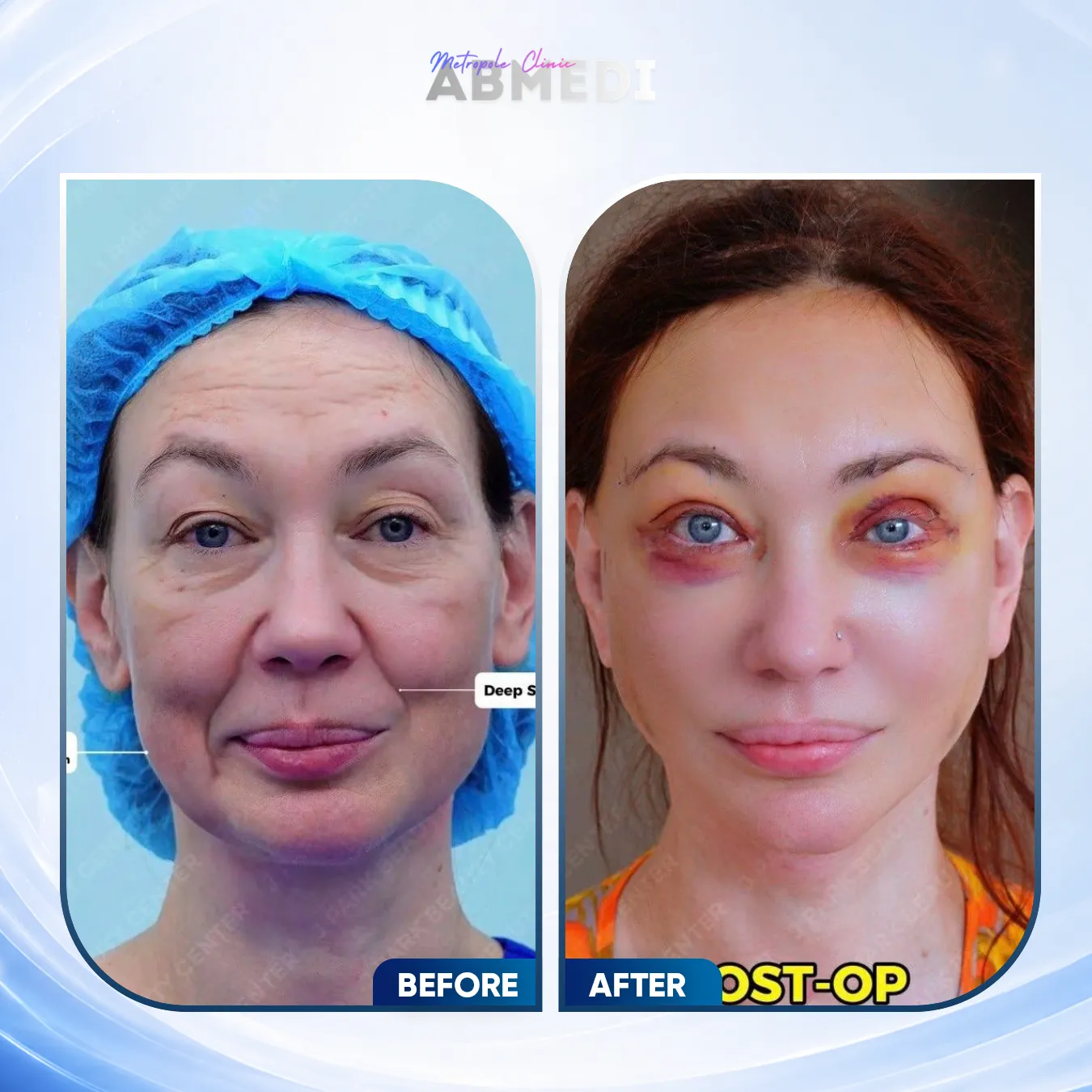
The best facelift is one nobody can spot. Friends should notice that you look rested and refreshed, not that you’ve “had work done.”
Signs of an Expertly Done Facelift vs. Over-Tightened Surgery
| ✅ Expertly Done Facelift | 🚩 Over-Tightened Facelift |
|---|---|
| Smooth, defined jawline | “Windswept” or pulled appearance |
| Cheeks lifted in a natural, upward direction | Horizontal pulling of the mouth corners |
| Hairline and sideburns in their natural position | Shifted or missing sideburns, visible hairline steps |
| Earlobes in a normal shape | “Pixie ear” (earlobe pulled downward) |
| Fine scars hidden in natural creases | Wide, visible scars in front of or behind the ear |
| Natural facial expressions | A stiff, mask-like look |
The difference usually comes down to technique and experience. Surgeons who reposition the deeper SMAS tissue rather than pulling the skin tight are far more likely to deliver a natural result. Learn how to vet your surgeon in our guide to the best facelift surgeons and hospitals in Vietnam.
Managing Expectations Realistically
A facelift is powerful, but it has limits:
- It lifts and tightens; it doesn’t change skin texture. Fine lines, sun spots, and enlarged pores may need laser or skincare treatments.
- It doesn’t treat the upper face. Hooded eyelids and brow heaviness require blepharoplasty or a brow lift.
- It doesn’t restore lost volume on its own. Fat grafting or fillers may be recommended alongside it.
- Results take time. Expect 3 to 6 months before you see what most people will notice, and up to a year for the final outcome.
- Some asymmetry is normal, since no face is perfectly symmetrical to begin with.
Understanding the healing process helps you stay patient. See our facelift recovery timeline for Vietnam for a week-by-week breakdown, and read about potential risks in our guide on whether a facelift in Vietnam is safe.
Main Reasons People Choose Facelift Surgery
Treating Jowls, Sagging Cheeks, and Deep Nasolabial Folds
The most common physical concerns that lead patients to a facelift include:
- Jowls: Sagging tissue along the jawline that blurs its contour
- Sagging cheeks: The midface descends, creating a hollow, tired look
- Deep nasolabial folds: The lines running from the nose to the corners of the mouth
- Marionette lines: Creases that run down from the corners of the mouth
- Loose neck skin and platysmal bands, often treated with a neck lift
These changes don’t respond well to creams or injectables alone once skin laxity becomes significant. A surgical facelift addresses the underlying cause: descended tissue and stretched support structures.
Restoring Youthful Facial Contours and Confidence
For many patients, a facelift is about more than appearance. It’s about feeling that the face in the mirror matches how they feel inside.
Patients often describe:
- Feeling more confident at work and in social settings
- No longer feeling self-conscious in photos or video calls
- Spending less time and money on makeup and repeated injectables
- A long-term return on investment compared with ongoing non-surgical treatments
For international patients, choosing Vietnam can make this decision more accessible. Our Vietnam facelift cost guide shows how much you could save, our guide to preparing for a facelift in Vietnam covers the logistics, and our Vietnam vs. Thailand facelift comparison helps you choose the right destination. Ready to talk about your goals? Start your facelift journey with Abmedi.
Medical disclaimer: This article is for informational purposes only and does not replace a consultation with a qualified, licensed plastic surgeon. Individual results vary.
